
Why I Hate The Term "MAGAts"
Miss me with the dehumanization.

I experience a particular kind of personal satisfaction that comes from landing on an insult that feels clever. I’m a “word person” so my preference is to reach for something that is biting and preferably with a little word play. “MAGAts” (which serves as a homophone for “maggots”) is one of those terms that appears preloaded with contempt and the illusion of wit. It carries the feeling that you’re not just angry, but also right, and maybe even funny. I get the appeal. Appearing correct and funny and righteous ticks all my ego boxes.
While the desire to compress an entire section of the population — one you experience as actively harmful — into two, dismissive syllables feels emotionally satisfying, the problem is that language doesn’t just express what we feel; it shapes the perimeter of what we’re allowed to feel next. Language, dear friends, has consequences. Ones we cannot always control. And once you start calling people vermin — even people whose politics you find abhorrent — you have redrawn the perimeter in a way that should make you feel, at least, a little uneasy.
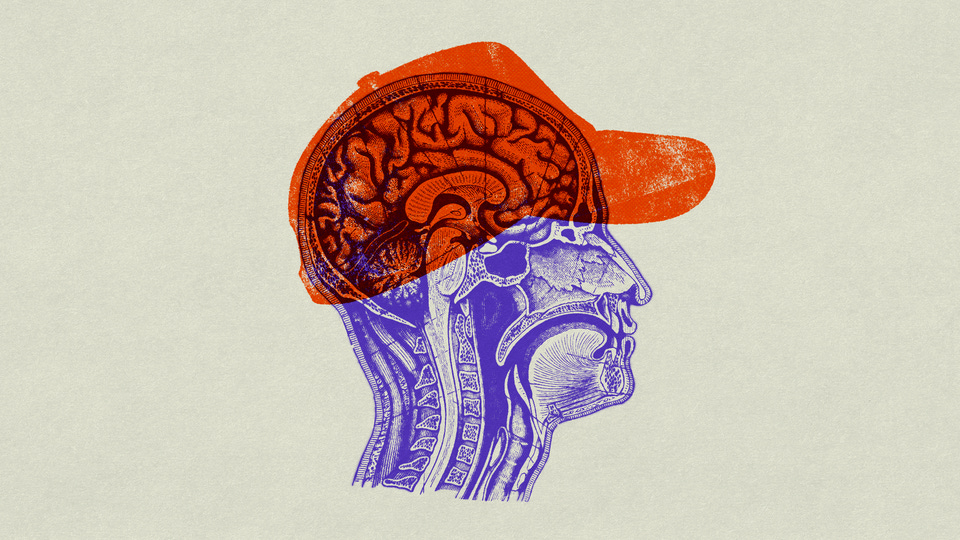
Here is an uncomfortable truth that is scarily easy to overlook when you are convinced you are on the right side of history: dehumanization is not a tool that only works in one direction. It is not a moral technology that becomes safe simply because you’re convinced you’re the one using it correctly. Calling a group “maggots” is not just a passing insult; it is a classification. It says these are not people in the full, complicated sense: they are an infestation, things to be dealt with, cleaned up, removed.
And if that language sounds disturbingly familiar, it should. It is the same conceptual move that has underwritten some of the worst political violence in history, across ideologies. You don’t have to be equating contemporary American partisanship with genocidal regimes to notice the shared mechanisms. And the point isn’t that using the term makes you identical to the worst actors in history; it’s just that it recruits the same psychological shortcut, the same permission structure. It should give you pause.
There is also a more insidious cost to the language, which is what it does to your own capacity for perception. Once you’ve decided that millions of people can be adequately described as insects, you’ve relieved yourself of the burden of curiosity. You no longer have to ask how someone got there, what fears or incentives or cultural pressures shaped them, what contradictions they might be living with. How many, otherwise decent people slip into fascism. How it might happen to you.
Understanding is not the same as excusing. You can think a set of political beliefs is dangerous, cruel, or built on total falsehoods, and still refuse to flatten the people who hold them into a single grotesque caricature. In fact, if you have any interest in changing minds or even just accurately diagnosing the problem, that refusal is kind of the minimum requirement. It’s hard to engage with a human being you’ve already decided is basically a creeping larva.
“Dehumanizing the dehumanizers” doesn’t actually work. Instead it normalizes the very behavior you claim to oppose. It lowers the floor of societal discourse. It teaches your own mind that humanity is conditional, something that can be revoked when someone crosses a line you’ve drawn, which is exactly the logic you’re trying to resist.
There is also a strategic angle, which is not as morally lofty but arguably more persuasive if you’re in the business of actually wanting outcomes to change. (And I am definitely in the business of wanting better outcomes). Insults like “MAGAts” actively entrench a culture war instead of concentrating on, the more crucial, class war. They confirm narrative bias — already deeply embedded in right-wing media ecosystems — that liberal or left-leaning people see them as subhuman, as contemptible, as beyond the pale of respect. As “deplorables”.
So the insult becomes evidence, a self-fulfilling prophecy. It hardens white supremacist identity rather than loosening it. You end up feeding ideology rather than puncturing it. And if your goal is to reduce the power and reach of that ideology, this is, bluntly, counterproductive.
None of this is to say you have to be polite in the face of policies or rhetoric you find harmful. Anger has its vital place; moral clarity is necessary; calling out bullshit is an essential task. But there’s a difference between attacking ideas and erasing the humanity of the people holding them, and that difference really, really matters.
Refusing to use a term like “MAGAts” isn’t about coddling anyone’s feelings; it’s about maintaining a line you don’t want crossed, even when crossing it would feel momentarily satisfying. It’s about recognizing that the language you choose is not just a reflection of the righteousness of your politics, but a rehearsal for the kind of world you’re willing to live in.
“Would you rather we call them ‘fascists’?”
100% yes. A fascist is a person.
If you’re going to name what you believe is actually happening, then calling someone a fascist at least operates in the realm of human description rather than biological disposal. “Fascist” is a claim about behavior, ideology, and alignment with power. It is an argument, however charged, that can in principle be examined, defended, refuted. It points to patterns: authoritarianism, the elevation of a strongman, the scapegoating of out-groups, the willingness to subordinate democratic norms to identity and order. It is not simply a pejorative to satiate your own anger.
It names an actual problem that exists in the world of human choices and structures, not in some imagined taxonomy of pests. And because it keeps the subject in the category of people, it also preserves the uncomfortable but necessary implication that people can participate in, resist, or even leave such an ideology. It doesn’t let anyone — speaker or subject — off the hook by pretending we’re dealing with something less complicated than human beings making choices inside of established systems.
There is moral and rhetorical clarity in refusing the euphemism-by-insult move. “MAGAts” obscures by reducing. It feels like saying something sharp while actually saying very little. “Fascist,” on the other hand, forces a conversation about specifics. What policies? What rhetoric? What actions? It invites scrutiny rather than foreclosing it. And, maybe more importantly, it keeps you accountable to your own claim. If you’re going to use a word with that much historical and ethical weight, you’re implicitly agreeing to mean it, to back it up, to be precise. That’s a higher bar than a pun-slur, and that’s the point. It disciplines your anger, channels it into something that identifies the danger without pretending the people involved have slipped out of the category of humanity altogether.
History tells us that once we abandon our shared humanity it is very difficult to recover it again. MAGA themselves are proving that to be true.

So can I call Stephen Miller a piece of shit? Yes and here’s why...
